No products in the cart.
Raw Dog Food vs Dehydrated Dog Food: Myths vs Facts Guide
Looking for a safer alternative to raw feeding? Explore our premium dehydrated dog food options .
Raw dog food vs dehydrated dog food is one of the most common debates among pet owners looking to improve their dog’s health. While both options offer natural nutrition, there are important differences in safety, convenience, and overall benefits.
Raw Dog Food Diet: Myths vs Facts Every Dog Owner Should Know
Advocates of this diet make enticing claims: Look younger! Slim down! Cure your ailments! Here’s what you need to know about eating raw. Many of these claims are backed by science.
Learn more in our complete guide to raw dog food benefits.
QUICK SUMMARY:
A raw dog food diet has gained popularity among pet owners looking for a more natural approach to canine nutrition. While many claim benefits like improved digestion and healthier skin, there are also concerns about safety and nutritional balance. In this guide, we break down the most common myths and facts about raw dog food so you can make the best decision for your dog.
Introduction:
Raw feeding has become one of the most talked-about trends in dog nutrition. Some pet owners swear by it, while others question its safety and effectiveness.
The truth? There are real benefits—but also real risks if it’s not done correctly.
Let’s separate fact from fiction so you can confidently choose what’s best for your dog.
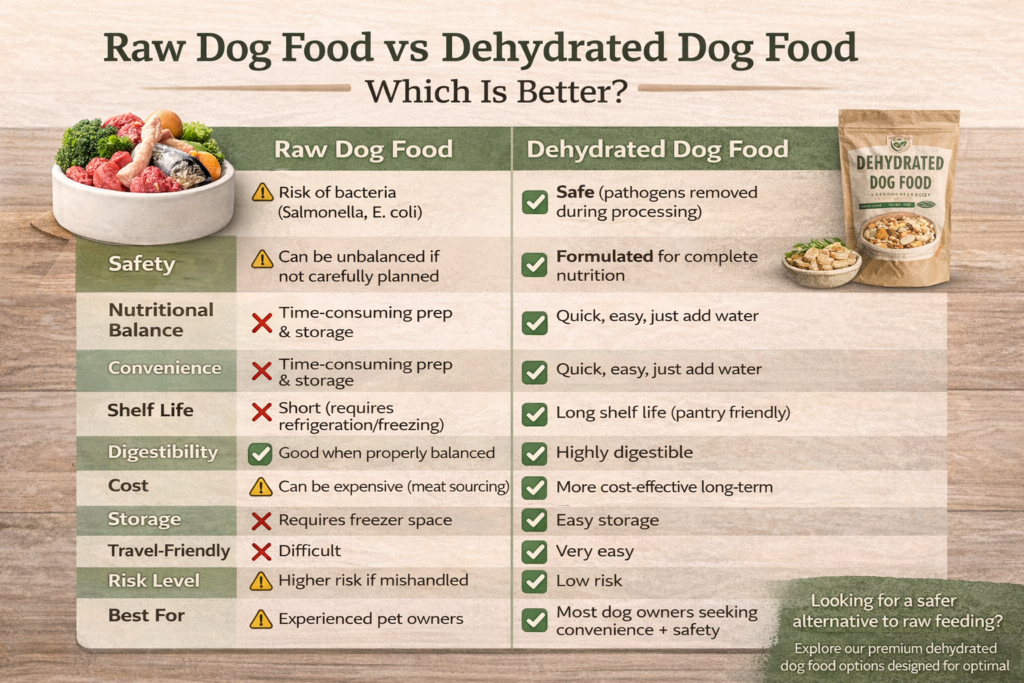
Choosing between raw and dehydrated dog food can be confusing. While both aim to provide natural nutrition, they differ significantly in safety, convenience, and overall risk. Here’s a side-by-side comparison to help you decide what’s best for your dog.
Raw Dog Food vs Dehydrated Dog Food: Which Is Better?
| Feature | Raw Dog Food | Dehydrated Dog Food |
|---|---|---|
| Safety | ⚠️ Risk of bacteria (Salmonella, E. coli) | ✅ Safe (pathogens removed during processing) |
| Nutritional Balance | ⚠️ Can be unbalanced if not carefully planned | ✅ Formulated for complete nutrition |
| Convenience | ❌ Time-consuming prep & storage | ✅ Quick, easy, just add water |
| Shelf Life | ❌ Short (requires refrigeration/freezing) | ✅ Long shelf life (pantry friendly) |
| Digestibility | ✅ Good when properly balanced | ✅ Highly digestible |
| Cost | ⚠️ Can be expensive (meat sourcing) | ✅ More cost-effective long-term |
| Storage | ❌ Requires freezer space | ✅ Easy storage |
| Travel-Friendly | ❌ Difficult | ✅ Very easy |
| Risk Level | ⚠️ Higher risk if mishandled | ✅ Low risk |
| Best For | Experienced pet owners | Most dog owners seeking convenience + safety |
Looking for a safer alternative to raw feeding?
Explore our premium dehydrated dog food options designed for optimal health and convenience.
Common Myths About Raw Dog Food
❌ Myth 1: Raw Diets Are Always Better Than Commercial Dog Food
Not always. While raw diets can be beneficial, they must be properly balanced. Poorly planned raw diets can lead to nutrient deficiencies.
❌ Myth 2: Dogs Can Eat Raw Meat Without Any Risk
Raw meat can contain harmful bacteria like Salmonella or E. coli. Safe handling and sourcing are critical.
❌ Myth 3: Raw Feeding Automatically Improves All Health Issues
While some dogs improve, raw diets are not a cure-all. Results vary depending on the dog’s health, breed, and existing conditions.
❌ Myth 4: All Dogs Thrive on Raw Diets
Some dogs may struggle with digestion or require specialized nutrition that raw diets don’t easily provide. Oxford Project, which lasted 20 years and followed 6,500 participants—have found that plant-based diets greatly reduce the risk of chronic diseases and conditions.
Facts About Raw Dog Food Diets
✔ Fact 1: Raw Diets Can Improve Coat & Skin Health
Many dog owners report shinier coats and reduced itching when switching to raw or minimally processed foods.
✔ Fact 2: Better Ingredient Transparency
Raw feeding allows you to control exactly what your dog is eating—no hidden fillers or artificial additives.
✔ Fact 3: Supports Natural Eating Patterns
Dogs are biologically designed to eat whole foods, including meat, organs, and bones.
✔ Fact 4: Can Improve Digestion (When Done Correctly)
A properly balanced raw diet can support gut health and reduce stool volume.
Risks of Raw Dog Food Diets
Before switching, it’s important to understand the risks:
- Bacterial contamination (Salmonella, E. coli)
- Nutritional imbalances
- Choking hazards from bones
- Time-consuming meal preparation
👉 This is why many dog owners look for safer alternatives.
Raw vs Dehydrated Dog Food (Better Alternative)
Raw feeding isn’t the only way to give your dog natural nutrition.
👉 Dehydrated dog food offers many of the same benefits without the risks
Key Advantages:
- Eliminates harmful bacteria
- Longer shelf life
- Easier to store and serve
- Nutritionally balanced
For a deeper breakdown of benefits, read our complete guide to raw dog food for dogs.
FAQ SECTION
Q: Is raw dog food safe?
A: It can be safe if properly handled and balanced, but there are risks of bacteria and nutrient imbalance.
Q: Is dehydrated dog food better than raw?
A: For many pet owners, yes. It provides similar benefits with fewer safety concerns.
Q: Can raw food improve my dog’s health?
A: Some dogs experience improvements, especially in coat and digestion, but results vary.
Q: Do vets recommend raw diets?
A: Opinions vary. Many vets recommend balanced, safe alternatives like dehydrated or fresh food diets.
Related Dog Nutrition Guides
Looking to improve your dog’s health naturally? Explore our expert guides on dehydrated dog food, natural supplements, digestion, and holistic dog nutrition to help your dog thrive.
- Complete Guide to Dehydrated Dog Food for Better Canine Health
- Natural Dog Supplement Guide for Gut Health and Detox
According to the American Kennel Club, gradual diet transitions help prevent digestive upset and support a smoother adjustment for dogs.