No products in the cart.
For a complete breakdown, read our full dehydrated dog food guide.
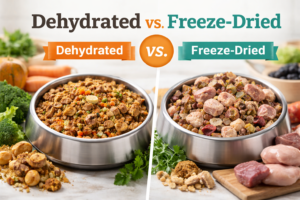
Dehydrated vs. Freeze-Dried Pet Food Comparison Chart
Here’s a quick side-by-side comparison of dehydrated pet food and freeze-dried pet food to help you decide which option is best for your dog.
| Feature | Dehydrated Pet Food | Freeze-Dried Pet Food |
|---|---|---|
| Processing Method | Uses warm air / low heat to remove moisture | Uses freezing and sublimation to remove moisture |
| Heat Exposure | Moderate heat | Very low heat |
| Nutrient Retention | Good nutrient retention | Excellent nutrient retention |
| Enzyme Preservation | Some enzymes may be reduced | More natural enzymes often preserved |
| Shelf Life | Long shelf life | Very long shelf life |
| Need for Preservatives | Usually not needed | Usually not needed |
| Rehydration | Rehydrates well with water | Can be served dry or rehydrated |
| Texture | Softer once rehydrated | Lightweight, airy, often crunchier dry |
| Storage | Easy to store | Easy to store |
| Convenience | Convenient for daily feeding | Very convenient, great for travel |
| Cost | Often more budget-friendly | Usually more expensive |
| Best For | Pet owners wanting balance of nutrition, convenience, and value | Pet owners wanting maximum nutrient preservation |
For many pet owners, dehydrated dog food offers the best balance of nutrition, shelf life, convenience, and value.
Which is Healthier?
In the Dehydrated vs. Freeze-Dried Pet Food comparison, both options are healthier than traditional kibble due to higher nutrient retention and fewer additives. However, freeze-dried food is often seen as superior due to its ability to preserve raw enzymes and maintain the food’s natural structure.
For those seeking the highest nutritional value, freeze-dried food is typically the better choice. For dogs needing digestive and detox support, consider our natural dog detox program to improve gut health and nutrient absorption.
Key Benefits at a Glance:
- Dehydrated Food: Longer shelf life, naturally preserved, reduces bacterial risks.
- Freeze-Dried Food: Retains more nutrients and enzymes, lightweight, no need for preservatives.
For optimal pet nutrition, freeze-dried food emerges as the healthier option in the Dehydrated vs. Freeze-Dried Pet Food debate due to its superior nutrient preservation and long-term storage stability. To better understand the nutritional advantages, explore the health benefits of dehydrated dog food for long-term health.
Frequently Asked Questions About Dehydrated vs. Freeze-Dried Dog Food
What is the main difference between dehydrated and freeze-dried dog food?
Premium dehydrated dog food uses warm air to remove moisture, while freeze-dried dog food removes moisture through a freezing process called sublimation. Freeze-dried food typically retains more nutrients, while dehydrated food offers a great balance of nutrition, shelf life, and affordability.
Is freeze-dried dog food healthier than dehydrated dog food?
Both options are significantly healthier than traditional kibble. Freeze-dried dog food may retain slightly more nutrients and enzymes, but high-quality healthy dehydrated dog food options still provides excellent nutrition and is often more practical for everyday feeding.
Do I need to add water to dehydrated dog food?
Yes, dehydrated dog food is designed to be rehydrated with water before serving. This helps restore moisture and makes it easier for dogs to digest.
Can freeze-dried dog food be served without water?
Yes, freeze-dried dog food can be served dry or rehydrated. However, adding water is often recommended to improve digestion and hydration.
Which is better for picky eaters: dehydrated or freeze-dried?
Freeze-dried dog food is often more appealing to picky eaters because it closely resembles raw food. However, many dogs also enjoy dehydrated dog food once it is properly rehydrated.
Is dehydrated dog food more affordable than freeze-dried?
Yes, dehydrated dog food is typically more cost-effective than freeze-dried options, making it a great choice for pet owners who want high-quality nutrition at a better value.
How long does dehydrated and freeze-dried dog food last?
Both have long shelf lives. Freeze-dried dog food can last for years when properly stored, while dehydrated dog food also lasts a long time without preservatives due to low moisture content.
Is dehydrated dog food good for digestion?
Yes, best dehydrated dog food for dogs is easy to digest, especially when combined with supplements like probiotics that support gut health and nutrient absorption.
According to research from PetMD, minimally processed dog foods can support better digestion and nutrient absorption.
Shop our premium dehydrated dog food today.