No products in the cart.
The Complete Guide to Dehydrated Dog Food
Everything Pet Owners Need to Know About Natural Dehydrated Dog Nutrition
Quick Summary: Dehydrated Dog Food
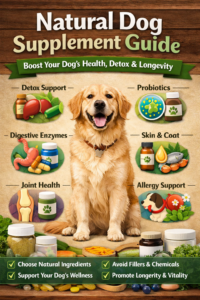
If you’re new to natural dog food, the key points below provide a quick overview of how it works and why many pet owners choose this type of natural diet. For a complete breakdown of natural supplements that support digestion, detox, and overall health, check out our Natural Dog Supplement Guide.
Key Takeaways
- Natural dog foodis made by slowly removing moisture from fresh ingredients using low heat.
- This process preserves more natural nutrients compared to highly processed kibble.
- Dehydrated diets often contain whole foods such as real meats, vegetables, fruits, and herbs.
- Many dogs experience improved digestion, healthier coats, and better energy levels when switching to dehydrated food.
- Natural dog food must be rehydrated with water before feeding to create a complete meal.
- It is often a good option for dogs with sensitive stomachs or food sensitivities.
What Is Dehydrated Dog Food?
Dehydrated dog meals is made by slowly removing moisture from fresh ingredients such as meats, vegetables, fruits, and herbs. The dehydration process preserves nutrients while allowing the food to be stored safely without artificial preservatives.
Unlike traditional kibble, which is typically cooked at extremely high temperatures, Dehydrated dog meals retains more of the natural enzymes, vitamins, and minerals found in whole foods.
When water is added back during feeding, the food rehydrates and becomes a nutritious, natural meal for dogs.
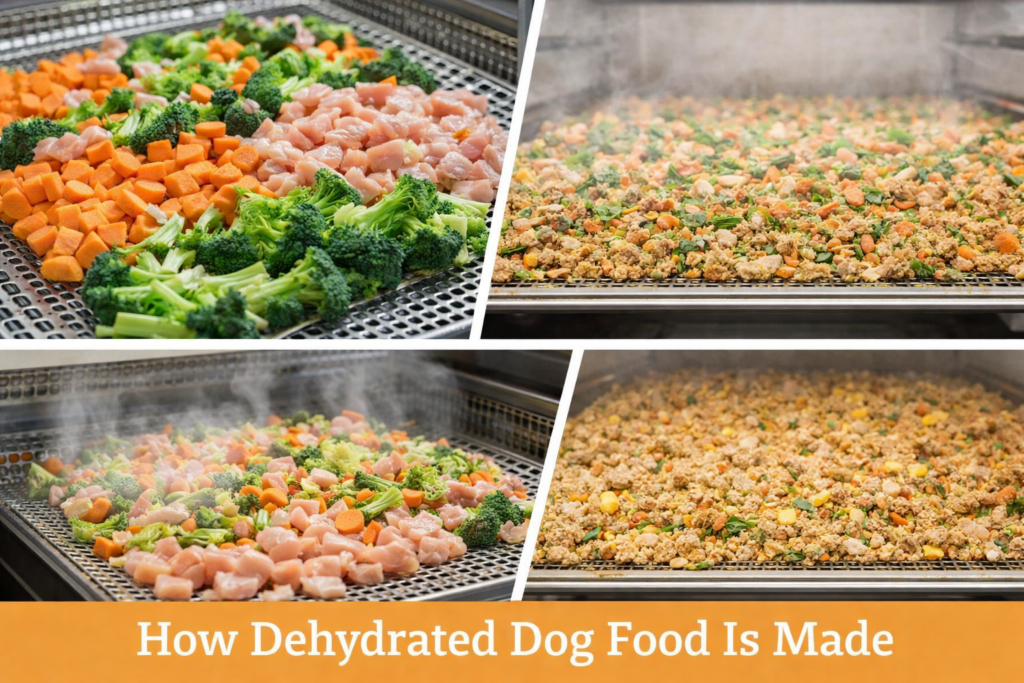
How Dehydrated Dog Food Is Made
The dehydration process gently removes moisture from fresh ingredients while preserving nutritional integrity.
Typical ingredients include:
– real meats
– vegetables
– herbs
– healthy fats
– natural vitamins and minerals
The ingredients are mixed and placed in dehydration chambers where warm air slowly removes moisture without damaging nutrients.
The result is a lightweight, shelf-stable food that retains most of the benefits of fresh ingredients.
Benefits of Dehydrated Dog Food
1. Better Digestive Health
Because dehydrated dog food contains natural ingredients and fewer fillers, it is often easier for dogs to digest.
2. Higher Nutritional Value
Traditional kibble requires extremely high heat during production, which can destroy important nutrients.
Dehydrated dog food preserves more of the natural nutritional profile of the ingredients.
3. Fewer Artificial Ingredients
Many commercial dog foods contain artificial preservatives and fillers such as corn or soy.
High-quality dehydrated dog meals focuses on whole-food ingredients instead.
4. Long Shelf Life Without Chemicals
By removing moisture, dehydration naturally prevents bacterial growth, allowing the food to remain shelf stable without chemical preservatives.
5. Convenient Storage and Preparation
Dehydrated dog meals is lightweight and easy to store. Simply add warm water to rehydrate the meal.
Is Dehydrated Dog Food Healthy?
Dehydrated dog meals is widely considered one of the healthiest alternatives to traditional kibble because it preserves more natural nutrients while avoiding excessive heat processing.
Unlike kibble, which is produced using high-temperature extrusion, dehydrated food removes moisture slowly using warm air. This gentle process helps retain important vitamins, minerals, enzymes, and natural flavors.
Because dehydrated dog food typically contains whole ingredients such as real meats, vegetables, fruits, and herbs, many dogs experience improved digestion and overall health when switching to this type of diet.
Pet owners often report benefits such as:
- improved digestion
- healthier skin and coat
- better energy levels
- fewer food sensitivities
- improved stool quality
When rehydrated with water before feeding, dehydrated dog food becomes a nutrient-rich meal that closely resembles fresh food.
For dogs with sensitive stomachs or allergies, dehydrated diets are often easier to digest than highly processed kibble.
Dehydrated Dog Food vs Kibble
Traditional kibble is produced through a process called extrusion where ingredients are cooked under high heat and pressure.
While this allows for large-scale production, it can destroy natural nutrients and enzymes found in the ingredients.
Dehydrated dog food uses a gentler process that preserves more of the food’s natural nutritional value.
Many dogs experience improved digestion, better energy levels, and healthier skin and coats when switching away from highly processed kibble.
Dehydrated Dog Food vs Kibble
To better understand how dehydrated dog food compares to traditional kibble, the chart below highlights the key differences in processing, nutrition, and preparation.
Dehydrated Dog Food vs Kibble Comparison Chart
| Feature | Dehydrated Dog Food | Traditional Kibble |
|---|---|---|
| Processing Method | Slowly dehydrated using low heat and warm air | Extruded at very high temperatures and pressure |
| Nutrient Retention | Preserves more natural vitamins, minerals, and enzymes | High heat can destroy some nutrients |
| Ingredients | Often made with real meats, vegetables, fruits, and herbs | Frequently contains fillers such as corn, wheat, or soy |
| Digestibility | Easier for many dogs to digest due to minimal processing | Can be harder to digest for sensitive dogs |
| Artificial Additives | Typically fewer preservatives and artificial ingredients | Often contains preservatives and additives |
| Moisture Content | Low moisture but rehydrated before feeding | Very dry and fed as-is |
| Preparation | Add warm water to rehydrate before serving | Ready to serve directly from the bag |
| Shelf Life | Long shelf life without heavy processing | Long shelf life due to preservatives and processing |
| Nutritional Quality | Closer to whole-food nutrition | More processed nutritional profile |
Dehydrated Dog Food vs Freeze-Dried Dog Food
Both dehydrated and freeze-dried dog foods are designed to preserve nutrients while extending shelf life.
Dehydrated food uses gentle heat and airflow to remove moisture.
Freeze-dried food removes moisture through a freezing process under vacuum pressure.
Both methods preserve nutrients better than kibble, but dehydrated food is often more affordable, easier to prepare, and gentler on digestion.
While both dehydrated and freeze-dried dog foods preserve nutrients better than traditional kibble, the two methods use different processes to remove moisture from fresh ingredients.
Dehydrated Dog Food vs Freeze-Dried Dog Food Comparison Chart
| Feature | Dehydrated Dog Food | Freeze-Dried Dog Food |
|---|---|---|
| Processing Method | Ingredients are slowly dried using warm air and low heat | Ingredients are frozen and moisture is removed through vacuum pressure |
| Temperature Used | Low heat dehydration | Extremely cold freezing process |
| Nutrient Retention | Retains most vitamins, minerals, and natural enzymes | Excellent nutrient preservation due to freeze process |
| Ingredient Texture | Slightly firm and dry before rehydration | Very light, porous, and crumbly texture |
| Preparation | Typically requires adding warm water before serving | Can be served dry or rehydrated with water |
| Digestibility | Gentle processing makes it easy for many dogs to digest | Also highly digestible due to minimal processing |
| Storage | Shelf stable and easy to store | Shelf stable but often packaged in airtight containers |
| Cost | Generally more affordable than freeze-dried food | Usually more expensive due to complex processing |
| Weight & Portability | Lightweight and compact | Extremely lightweight due to moisture removal |
| Meal Appearance After Rehydration | Resembles fresh cooked food | Rehydrates into a soft, fresh-like texture |
Which Dogs Benefit Most From Dehydrated Dog Food?
Dehydrated meals can benefit dogs of all ages and breeds, but it is especially helpful for dogs that experience:
– sensitive stomachs
– food allergies
– digestive issues
– poor appetite
– low energy levels
Because the ingredients are less processed and easier to digest, dehydrated food can support long-term canine health.
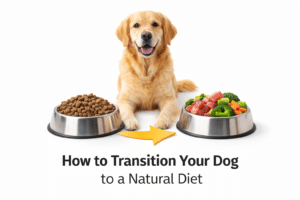
How to Transition Your Dog to Dehydrated Dog Food
Switching your dog’s diet should always be done gradually.
Suggested transition schedule:
Day 1–2: 75% old food / 25% dehydrated food
Day 3–4: 50% old food / 50% dehydrated food
Day 5–7: 25% old food / 75% dehydrated food
After one week, most dogs can comfortably transition to a fully dehydrated diet. Starting with a gentle, easy-to-digest formula such as dehydrated dog food for sensitive stomachs can help make the transition smoother.
Choosing the Best Dehydrated Dog Food
When selecting dehydrated dog food for your pet, look for:
– real meat as the primary ingredient
– natural vegetables and herbs
– no artificial fillers
– no chemical preservatives
– balanced nutrition for your dog’s life stage
High-quality dehydrated meals should provide complete and balanced nutrition while supporting digestive health.
For example, formulas made with real meats, vegetables, and natural ingredients—like dehydrated dog food designed for sensitive stomachs—can help support digestion while delivering complete nutrition.
Supporting Your Dog’s Health With Natural Nutrition
Nutrition plays a critical role in your dog’s long-term health and vitality.
Choosing a diet that focuses on natural ingredients and minimal processing can help support digestion, immune health, and overall wellness.
Many pet owners notice improvements in energy levels, coat quality, and digestive comfort after switching to dehydrated dog food.
If you’re looking for a high-quality option, you can explore our dehydrated dog food for sensitive stomachs designed to support digestion and overall canine wellness.
Recommended Dehydrated Dog Food
If you’re considering transitioning your dog to a natural diet, high-quality dehydrated food can be an excellent option.
Puptection’s Original Formula Dehydrated Dog Food for Sensitive Stomachs is designed to provide balanced nutrition while supporting digestive health and overall vitality.
Frequently Asked Questions About Dehydrated Dog Food
Is dehydrated dog food healthy for dogs?
Yes. Dehydrated dog food preserves natural nutrients and avoids heavy processing used in kibble production. Many pet owners choose natural dehydrated dog food formulas to support digestion and overall health.
Is dehydrated dog food better than kibble?
Many dogs digest dehydrated food more easily because it contains fewer fillers and more whole ingredients.
How do you prepare dehydrated dog food?
Simply add warm water to the dehydrated mixture and allow it to rehydrate before serving.
How long does dehydrated dog food last?
Dehydrated food typically has a shelf life of 12 to 24 months when stored in a cool, dry place. Because the dehydration process removes moisture that bacteria need to grow, the food remains shelf stable without the need for artificial preservatives. Once rehydrated with water, it should be served immediately and not stored for extended periods.
Why Many Veterinarians Recommend Dehydrated Dog Food
Many veterinarians and pet nutrition experts recommend minimally processed diets because they retain more natural nutrients than highly processed pet foods. Dehydrated food is made using low temperatures that slowly remove moisture while preserving important vitamins, minerals, and enzymes found in whole foods.
Unlike traditional kibble, which is often cooked at extremely high temperatures during extrusion, dehydrated diets maintain more of the natural nutritional value of ingredients such as real meats, vegetables, fruits, and herbs.
For dogs with food sensitivities or digestive issues, dehydrated food can sometimes be easier to digest because the ingredients are closer to their natural form and contain fewer artificial additives or preservatives. According to the American Kennel Club, minimally processed dog foods may preserve more nutrients than traditional kibble.
Related Dog Nutrition Guides
Then link to a few articles like: